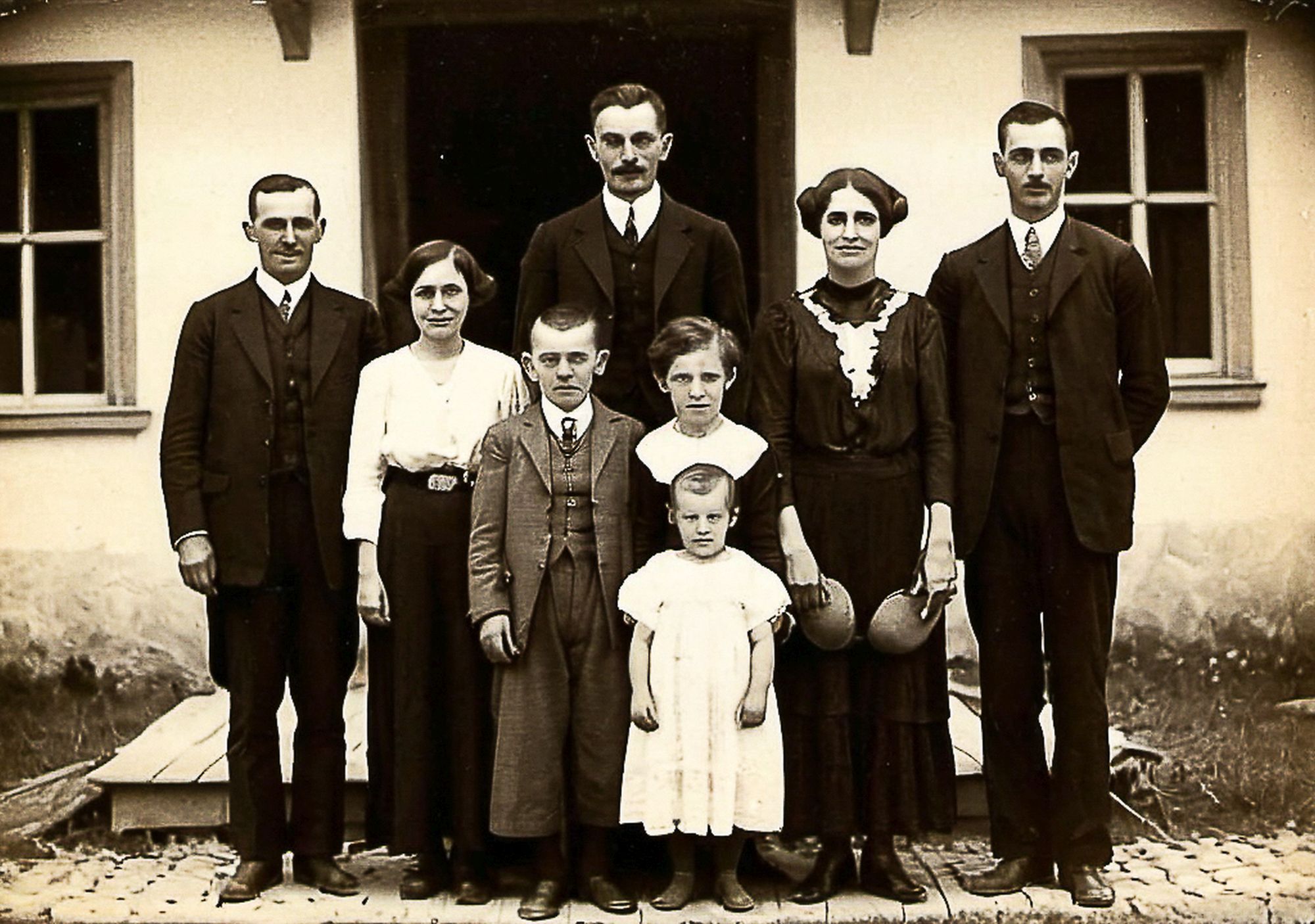
From the installation Subjectless Memory
2024
AI-generated image, Photoshop, mixed media; archival pigment print
(Stable Diffusion 3 | Stable Diffusion AI Art, Model: OpenArt SDXL)
10 × 7 cm
The project explores the randomness and fallibility – one might say unreliability – of the mechanisms of memory, and the new reality of collective memory detached from actual events. When the mind is instructed to recall a memory, it recreates it rather than extracting it in its absolute state from some mental “archive”. As a result, the reality of the event becomes distorted, altered and supplemented. I recognised a parallel between prompts and memory retrieval: the command is the same each time but the result changes slightly. Is it perhaps not real? It is perhaps not those people who were actually in the photograph? Perhaps it was not even taken then? If a memory belongs to me but is not entirely real, can the error of that memory be removed from my identity? One hundred memories of the same family. Work process: Using the identical prompt: family group photo, Transylvania, 1920. The algorithm generated more than one hundred similar yet different images. The differences are not intentional. No parameters were changed during the process. The images were generated and layered in Photoshop to create a composite “mass”.
photo: Torkos Márk Erik
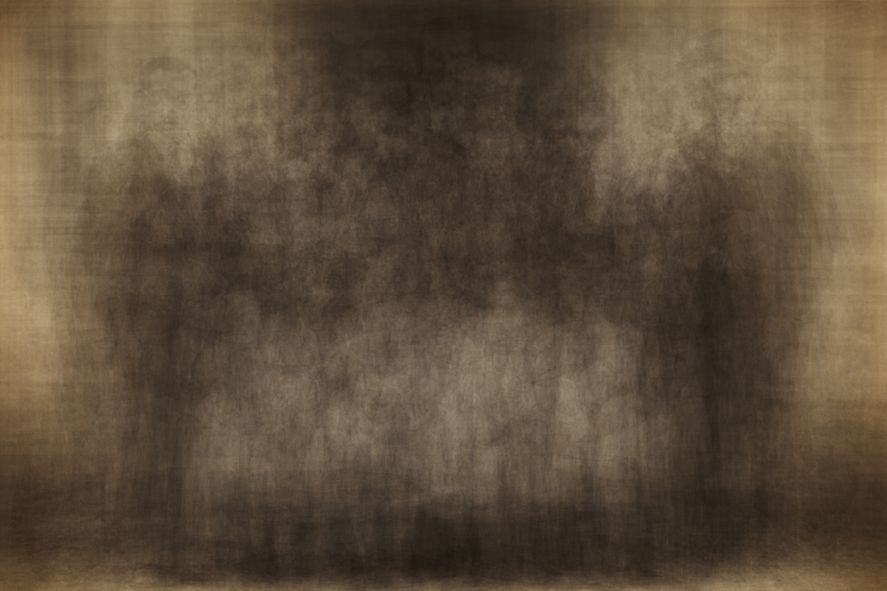
From the installation Subjectless Memory
2024
AI-generated image, Photoshop, mixed media; archival pigment print
(Stable Diffusion 3 | Stable Diffusion AI Art, Model: OpenArt SDXL)
10 × 7 cm
The project explores the randomness and fallibility – one might say unreliability – of the mechanisms of memory, and the new reality of collective memory detached from actual events. When the mind is instructed to recall a memory, it recreates it rather than extracting it in its absolute state from some mental “archive”. As a result, the reality of the event becomes distorted, altered and supplemented. I recognised a parallel between prompts and memory retrieval: the command is the same each time but the result changes slightly. Is it perhaps not real? It is perhaps not those people who were actually in the photograph? Perhaps it was not even taken then? If a memory belongs to me but is not entirely real, can the error of that memory be removed from my identity? One hundred memories of the same family. Work process: Using the identical prompt: family group photo, Transylvania, 1920. The algorithm generated more than one hundred similar yet different images. The differences are not intentional. No parameters were changed during the process. The images were generated and layered in Photoshop to create a composite “mass”.
photo: Torkos Márk Erik
Márk Erik Torkos
(1996, Zilah / Zalău, RO)
Márk Erik Torkos is a new media artist and photographer. He graduated with a BA in graphic design from the Partium Christian University Oradea in 2018 and obtained his MA in visual communication in 2020. His work is characterised by the combination of documentary photography, experimental moving image, sound and installation-based thinking with a particular focus on the exploration of landscape, memory and collective experience. He is an active member of the KopiaKollektiva contemporary photography and experimental moving image association. He currently works as a photojournalist.