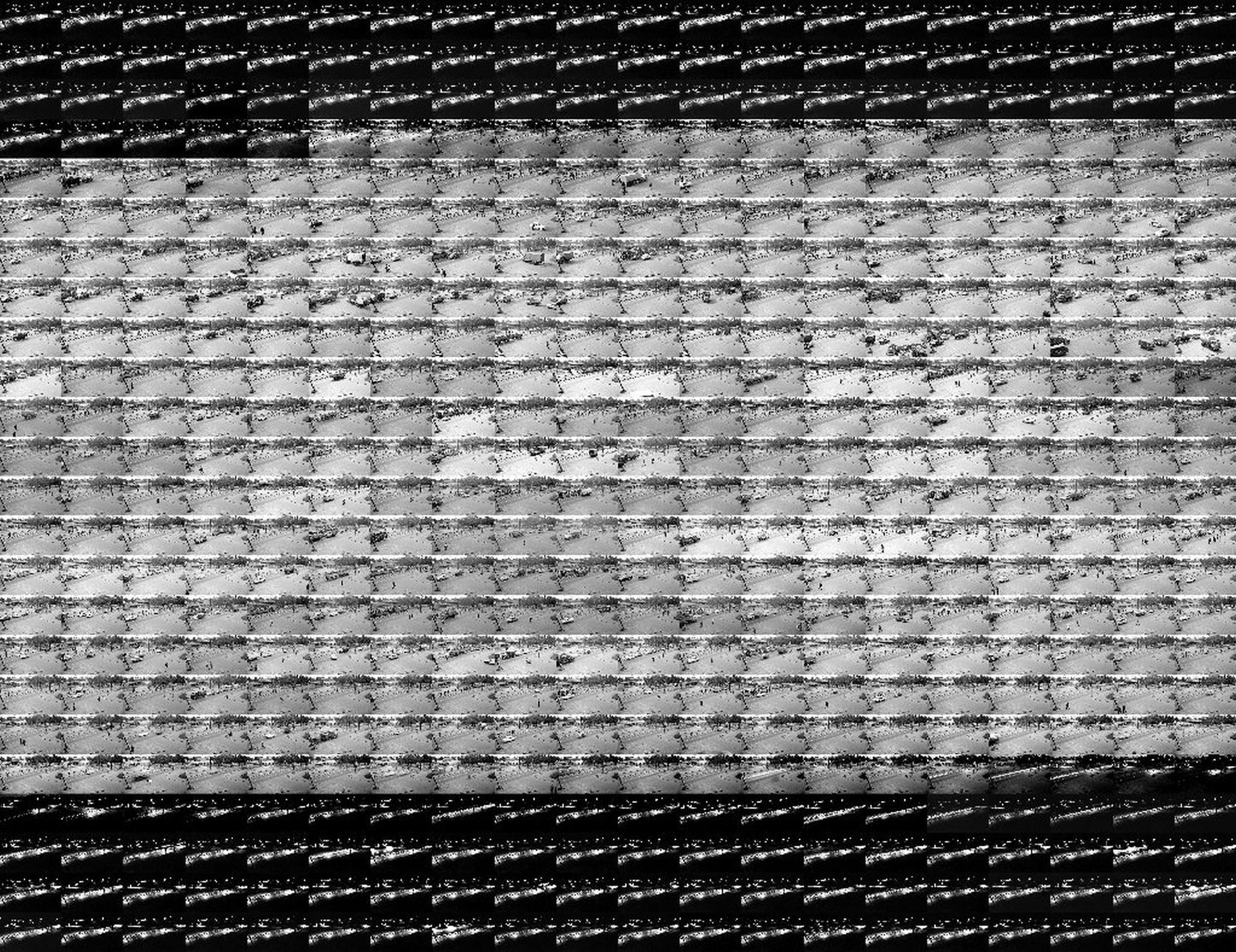
1975. VI. 5. REMAKE 1
2022
negative scanning, retouching, digital technique
197 × 150 cm
The remake of 1975. VI. 5. could finally be realised during the Covid period. I had planned to scan the negatives of the original series of 480 images, retouch them and assemble them precisely into a single panel using digital techniques for years but I never had the nine or ten months required for the task. That was finally made possible by the pandemic, when I could not leave my flat. The project, which essentially took up the entire year in 2022, resulted in two large panels and also something unexpected: two sequences titled Shadows and Pixels. Pixels proved particularly exciting, as it revealed to me a mysterious realm emerging at the digital frontier of photography.
photo: Haris László
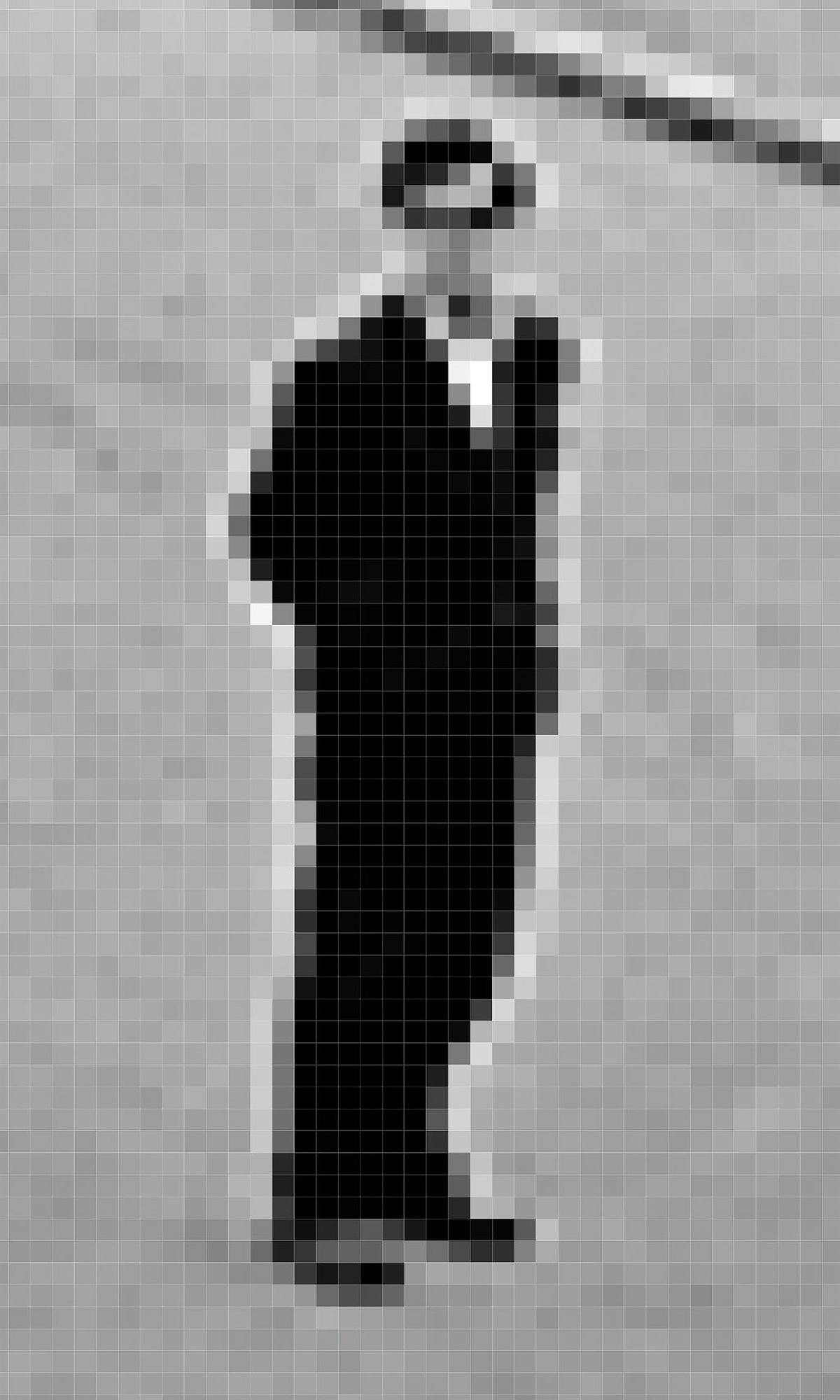
1975. VI. 5. REMAKE | The Informer
2022
negative scanning, retouching; digital giclée print
60 × 100 cm
The remake of 1975. VI. 5. could finally be realised during the Covid period. I had planned to scan the negatives of the original series of 480 images, retouch them and assemble them precisely into a single panel using digital techniques for years but I never had the nine or ten months required for the task. That was finally made possible by the pandemic, when I could not leave my flat. The project, which essentially took up the entire year in 2022, resulted in two large panels and also something unexpected: two sequences titled Shadows and Pixels. Pixels proved particularly exciting, as it revealed to me a mysterious realm emerging at the digital frontier of photography.
photo: Haris László
László Haris
(1943, Budapest)
László Haris photographed the scenes of the Hungarian Revolution of 1956, when he was still a teenager. The photos he took at the time came to light in 2005, and have since travelled the world. His career as an artist began with the SZÜRENON exhibition in 1969. Up until 1981, he only showed his works at visual arts exhibitions, as a member of the New Hungarian Avant-garde. Initially, he took large non-figurative photos, and from 1973 he produced important conceptual works (on his own, and in collaboration with Sándor Csutoros and József Molnár V) that responded to the cultural and political scene in Hungary. In his work, he generally explores the boundaries of photographic art, often crossing them. He won the Rudolf Balogh Award in 2001 and the Demeter Prize in 2003. He received the Prima Prize in 2017 and the titles of Meritorious Artist and Outstanding Artist in 2018 and 2024, respectively. He has been a member of the Hungarian Academy of Arts since 2007.